How Do You Talk to Your Vet About Peptides for Your Dog?
Bring the product name, the certificate of analysis for your dog's lot and the studies you read. Then ask these questions, and listen for these answers.

Bring three things to the appointment: the product name, the certificate of analysis for your dog's lot, and the studies you read. Dog peptide research is recent and most of it comes from other species, so many vets have not been asked about it yet, and a prepared owner gets a better conversation.
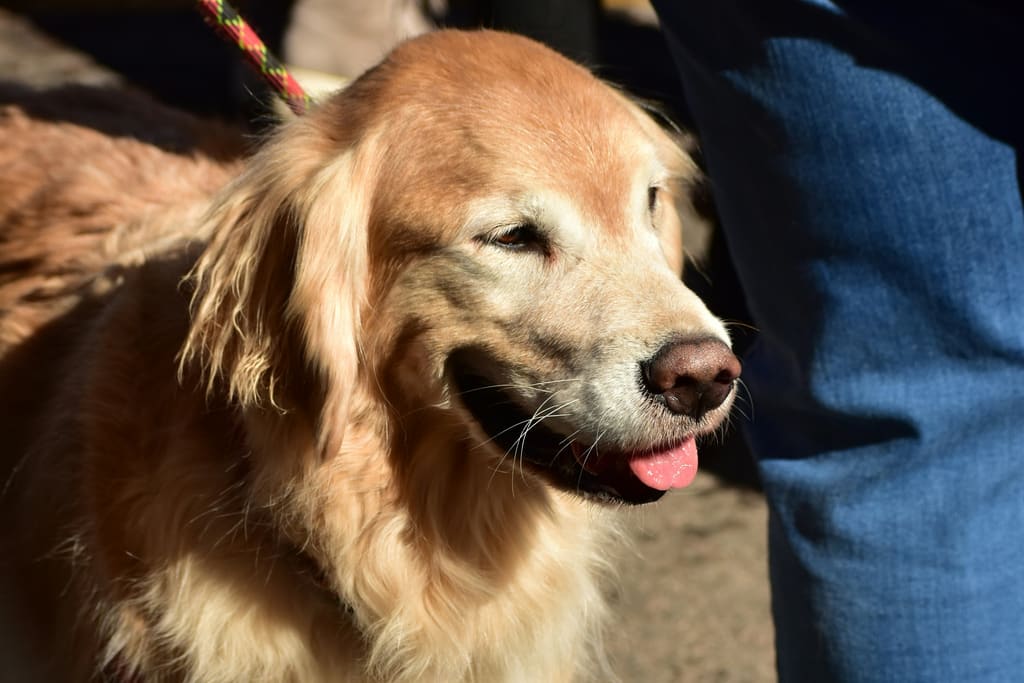
Picture a 7-year-old Golden Retriever who has slowed on the morning walk. Your vet already knows her history, her weight and her bloodwork, and that knowledge matters more than anything you find online. If her current plan is working, say so and keep it going. The peptide conversation is an addition to good care, and the vet is the person who knows what fits.
What should you bring to the appointment?
Bring a one-page folder with five items, so the vet can judge the product in a few minutes instead of guessing at it.
- The product name and what the vial says it contains, written exactly as the label reads.
- The certificate of analysis for that specific lot, printed or saved on your phone.
- Two or three studies, each with a note on the species (rat, mouse, beagle, cell culture).
- A list of everything your dog takes now: medications, joint diet, fish oil, supplements.
- Your goal in plain words, such as "I want her to take the stairs without stopping on the landing."
The certificate matters most. It is the lab's own report on identity and purity for one lot, and a vet can read it quickly. Pure Pet Peptide puts a QR code on every vial that opens the certificate for that vial's lot, and every batch is checked by an outside laboratory for identity and purity before it ships. If you are still learning to read one, start with how to tell if a dog peptide is pure and the company's own guide to reading a peptide certificate of analysis.
Choose studies you can describe honestly. A review of BPC-157 and soft tissue found that most work used small rodent models, so label it that way. Your vet will respect an owner who says "this is rat data" far more than one who hands over a headline.
Why have many vets not been asked about peptides before?
Because dog peptide research is young, and a vet cannot read what has not been written. PubMed searches pairing thymosin beta-4 or KPV with dogs came back empty, and the dog work that exists is narrow.
Two examples show how narrow. Researchers measured how BPC-157 moves through the body in rats and beagle dogs, which describes handling and clearance and says nothing about outcomes in a Labrador. A 1996 study put a tripeptide-copper complex on pad wounds in 12 English Pointers, and the abstract does not name GHK-Cu. A vet reading those would reasonably want more.
Owners also hear about peptides in places vets do not read. A survey of 345 dog owners found veterinarians were the most commonly reported source of information, and owners of dogs with cancer leaned more on social media groups and blogs. The vet is still the trusted voice, which is why the conversation is worth having. Our explainer on what peptides are for dogs gives you the shared vocabulary.
What questions should you ask your vet?
Ask open questions that invite the vet's judgment, and leave dosing and administration for the vet to answer. Six that work:
- Given my dog's history and current medications, is there any reason to wait or avoid this?
- What would you want to see in the paperwork before you were comfortable with a product?
- Which parts of this research look strong to you, and which look thin?
- If we tried it, how would we tell whether it is doing anything for her?
- What would make you want to stop?
- Do you want to talk about dosing and administration, or would you rather I leave that with you entirely?
Question 6 matters. Pure Pet Peptide publishes no dosing or administration guidance and sends those questions to a veterinarian, so the vet is the only source you should expect to hear from on how a product is used. A 2026 orthopaedic review of therapeutic peptides says the same thing from the literature side: information on indications, dosing, frequency and duration remains unknown.
What does a good answer from your vet sound like?
A good answer is specific and curious, even when it is cautious. These are the phrases that tell you the vet is engaged.
"I have not seen dog data on that, so show me what you found." That vet is willing to read your folder.
"I would want to see the certificate for this lot." That vet knows why paperwork comes first, and the instinct is sound: a market test of a peptide drug from online sellers found purity of 7.7 to 14.37 percent against 99 percent on the label. A lot-specific certificate is how you show yours was checked.
"Let us look at her bloodwork and her current medications first." That vet is placing the question inside her whole picture.
"I would rather wait until we have more dog data." That is a legitimate answer too, and it keeps the door open. Ask what would change the vet's mind, and write the answer down.
A vet who says "I do not know yet, let me look into it" has given you something useful. Ask to book a follow-up so the question has a date.
How do you keep the conversation warm if your vet sounds cautious?
Read caution as a sign your vet takes your dog seriously. Vets answer for the whole plan, including every product that goes near your dog, so a careful reply reflects the job.
A few habits help. Open with what you appreciate about the care so far. Say plainly that you are asking, not announcing. Let the vet keep the final word on whether and when. Offer to leave the folder, and ask whether a colleague with a rehabilitation or integrative focus might want to weigh in.
Breed and age change the details, so tell the vet which applies. A senior dog on joint support and a young Border Collie with a sports schedule are different conversations. If you are comparing sellers before the visit, our checklist on how to choose a peptide supplier gives you a standard to show.
What if your vet says no?
Ask what the no rests on. It may rest on your dog's medications, on the thin dog data, or on the vet's comfort with a product that has little dog data behind it. Each reason is information, and each one changes what you do next.
You can come back in six months with new studies, or ask for a second opinion from another practice. What you should not do is go around your vet and start a product on your own. The vet who knows your dog's history is the one who can weigh a peptide against it.
If the answer is yes or maybe, the vet will tell you how it is given and for how long, because that is the vet's call. Pure Pet Peptide ships its peptides dry, as a freeze-dried powder, and orders leave the US lab partner within 2 to 5 business days. Settle the conversation with your vet before you order.
FAQ
Do I need my vet's permission before buying a peptide for my dog?
Talk to your vet first. Dosing and administration are medical decisions, and a vet who knows your dog's history is the person to make them.
What is a certificate of analysis, and why should I show it to my vet?
It is a laboratory report on one lot that lists identity and purity results. Showing it lets your vet judge what is actually in the vial instead of relying on the label.
Should I bring studies done on rats and mice?
Yes, with the species written on each one. Most peptide research used rodents or cell cultures, and saying so up front builds trust with your vet.
What if my vet has never heard of BPC-157?
That is common. Hand over a short summary, such as the BPC-157 post and the studies it cites, and ask for a follow-up at the next visit.
Who decides how a peptide is given to my dog?
Your veterinarian, and that is the right source. Pure Pet Peptide sends dosing and administration questions to a veterinarian for the same reason.
Sources
- Bianco AV, Abood S, Mutsaers A, Woods JP, Coe JB, Verbrugghe A. Unconventional diets and nutritional supplements are more common in dogs with cancer compared to healthy dogs: An online global survey of 345 dog owners. Veterinary and Comparative Oncology. 2020. PubMed
- Mayfield CK, Bolia IK, Feingold CL, et al. Injectable Peptide Therapy: A Primer for Orthopaedic and Sports Medicine Physicians. The American Journal of Sports Medicine. 2026. PubMed
- He L, Feng D, Guo H, et al. Pharmacokinetics, distribution, metabolism, and excretion of body-protective compound 157, a potential drug for treating various wounds, in rats and dogs. Frontiers in Pharmacology. 2022. PubMed
- Swaim SF, Vaughn DM, Kincaid SA, et al. Effect of locally injected medications on healing of pad wounds in dogs. American Journal of Veterinary Research. 1996. PubMed
- Ashraf AR, Mackey TK, Vida RG, et al. Multifactor Quality and Safety Analysis of Semaglutide Products Sold by Online Sellers Without a Prescription. Journal of Medical Internet Research. 2024. PubMed
- Gwyer D, Wragg NM, Wilson SL. Gastric pentadecapeptide body protection compound BPC 157 and its role in accelerating musculoskeletal soft tissue healing. Cell and Tissue Research. 2019. PubMed
Read next

What Are Peptides for Dogs?
A peptide is a short chain of amino acids the body uses as a signal. See what BPC-157, TB-500, GHK-Cu and KPV were studied for, and in which species.
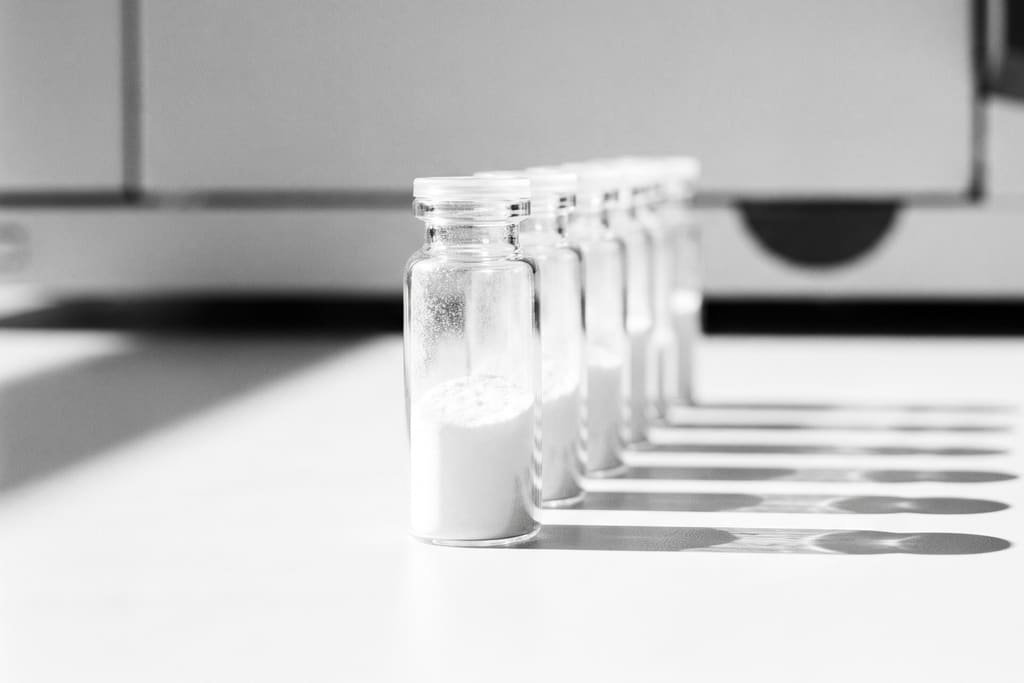
How Can You Tell If a Peptide for Your Dog Is Pure?
A peptide for your dog is pure when an outside lab has tested the exact lot in your vial. Here is how to read the certificate that shows it.
How Do You Choose a Peptide Supplier for Your Dog?
Choose a peptide supplier for your dog with seven checks, from outside lab testing on every batch to a certificate that matches the lot on your vial.


