What Are Peptides for Dogs?
A peptide is a short chain of amino acids the body uses as a signal. See what BPC-157, TB-500, GHK-Cu and KPV were studied for, and in which species.

A peptide is a short chain of amino acids that the body uses as a signal. Dog owners ask most about four of them, BPC-157, TB-500, GHK-Cu and KPV, and the research on all four comes mostly from rats, mice and cell cultures.
Picture a 9-year-old Labrador who now takes the stairs one at a time and waits at the bottom before the last step. You already do the sensible things: a joint diet, fish oil, a rehab plan your vet signed off on. If those work, keep doing them. Peptides come up when an owner wants to know what else the research covers, and this page is the map before you read anything deeper.
What is a peptide, and why are dog owners hearing about them now?
A peptide is a short string of amino acids, smaller than a protein, and your dog's body already makes many of them. Insulin is one. So are the hormones that tell the kidneys how much water to hold.
The four that dog owners search for are lab-made copies or fragments of signals the body uses in repair and inflammation. Researchers have studied them in tendon, skin and gut models. A 2025 systematic review of BPC-157 found 36 studies, 35 of them preclinical, which tells you how much of this field still sits in the lab.
Which peptides do dog owners ask about most?
Four names come up again and again: BPC-157, TB-500, GHK-Cu and KPV. The table shows what each one has been studied for and in which species.
| Peptide | What it is | Studied for | Species in the research |
|---|---|---|---|
| BPC-157 | A 15-amino-acid sequence first described from gastric juice | Tendon, ligament, muscle and bone injury models | Mostly rats and cell cultures; one pharmacokinetic study in rats and beagles |
| TB-500 | A synthetic fragment of thymosin beta-4 | New blood vessel growth and tissue repair in preclinical models | Rats and other preclinical models; no dog study found |
| GHK-Cu | A three-amino-acid peptide bound to copper | Skin remodeling, wound repair, antioxidant activity | Rats, mice, pigs, cell cultures; one dog pad-wound study with a tripeptide-copper complex |
| KPV | The last three amino acids of alpha-MSH | Inflammation in intestinal models | Mice |
The detail behind each row sits in its own post: BPC-157 for dogs, TB-500 for dogs, GHK-Cu for dogs and KPV for dogs.
A few specifics help read the table. In a rat Achilles tendon model, researchers reported better load to failure and function in rats given BPC-157 than in controls. A 2026 orthopaedic review of therapeutic peptides reports that TB-4 and its derivative TB-500 promoted angiogenesis and tissue repair in preclinical models. A 2026 exploratory rat study compared BPC-157, TB-500 and both together on Achilles tendon repair and called the results preliminary. KPV was tested in two mouse models of colitis.
Why is the dog-specific research still early?
Most peptide research starts in rodents, and it takes years before anyone repeats the work in dogs. A review of BPC-157 and soft tissue found that the majority of studies used small rodent models and that only a handful of research groups had run in-depth work.
Dogs do appear in the record, in narrow ways. A pharmacokinetic study followed BPC-157 through the body in rats and beagle dogs. Researchers reported a half-life under 30 minutes and said the peptide broke down into small fragments and single amino acids. That tells you how the body handles it. It does not tell you whether it helps a Labrador's hips.
On the skin side, a 1996 veterinary study tested a tripeptide-copper complex on pad wounds in 12 English Pointers and measured collagen at the wound site. The authors reported more type I collagen than in saline controls. The abstract does not name GHK-Cu, so read it as a related compound rather than the exact product. A review of GHK also lists wound repair in the foot pads of dogs among its animal findings.
Our own PubMed searches pairing thymosin beta-4 or KPV with dogs came back empty. So the picture is promising animal data, a few dog entries, and a lot of open questions your veterinarian can help you weigh.
How are these peptides different from the insulin and other hormones vets already use?
Insulin and desmopressin are peptide hormones, and vets have used them in dogs for decades. The difference is the paper trail behind them: dog-specific trials and a manufacturing standard written for that product.
A review of canine diabetes describes insulin deficiency and insulin resistance as the core processes behind the disease, which is why insulin sits at the center of its management. In a retrospective study of 20 dogs with central diabetes insipidus, dogs given desmopressin acetate responded well. Both are peptides, and both came with dog-specific evidence for a defined condition.
BPC-157, TB-500, GHK-Cu and KPV sit earlier on that path. The studies exist and are interesting, and the dog work has not caught up. That gap is the reason a conversation with your vet beats any single online claim. Our guide on how to talk to your vet about peptides lays out what to bring.
Why do sourcing and testing matter more than any single claim?
Because the research describes a specific molecule, and a vial only matches that research if it contains what the label says. Most people cannot tell what is in a vial they buy, and the paperwork is how you find out.
A market study of a peptide drug sold by online sellers without a prescription shows the gap. Researchers bought vials, ran them through liquid chromatography and mass spectrometry, and found purity of 7.7 to 14.37 percent against 99 percent on the labels. That was one product, not every seller, but it shows what an unlabeled vial from a marketplace can be.
The standard worth holding is simple. Look for an outside laboratory that checks identity and purity, a certificate of analysis for the specific lot, and a way to tie that certificate to the vial in your hand. Our posts on telling whether a dog peptide is pure and choosing a supplier walk through each check.
Pure Pet Peptide meets that standard in checkable ways. Every batch goes to an outside laboratory for identity and purity before it ships, and every vial carries a QR code that opens the certificate of analysis for its own lot. Scan it and you read the lot's own numbers. The company also publishes how to read a peptide certificate of analysis, so you know what you are looking at before you buy.
What should a dog owner do first?
Start with the vet you already trust, and bring the questions rather than the product. Breed and age shape the conversation: a large-breed dog like a Rottweiler and a senior dog like that 9-year-old Lab raise different questions.
Pure Pet Peptide publishes no dosing or administration guidance and sends those questions to a veterinarian. That is the right place for them, because only a vet who has examined your dog can weigh the full picture.
If a joint diet, fish oil or a rehab plan is working, say so at the appointment and keep it going. Peptides are a question for your vet to weigh alongside whatever already helps.
FAQ
What does BPC-157 stand for?
It stands for body protection compound-157, a 15-amino-acid sequence first described from gastric juice. Researchers have studied it mainly in rat tendon, ligament, muscle and bone models.
Are peptides the same as steroids?
No. Peptides are short chains of amino acids, while steroids are a different class of molecule built from a fat-based ring structure. Insulin is a peptide, and vets use it in dogs every day.
Have peptides been studied in dogs?
A little. Researchers tracked BPC-157 through the body in beagle dogs, and a 1996 study tested a tripeptide-copper complex in the pad wounds of English Pointers. Most effect studies on these four peptides used rats, mice or cell cultures.
How do I know what is in a peptide vial?
Ask for the certificate of analysis for that lot, run by an outside laboratory. Pure Pet Peptide puts a QR code on every vial that opens the certificate for its own lot, so you can check before anything goes near your dog.
Who decides how a peptide is used for my dog?
Your veterinarian. Dosing and administration are medical decisions that depend on your dog's history, and Pure Pet Peptide sends those questions to a vet rather than answering them.
Sources
- Vasireddi N, Hahamyan H, Salata MJ, Karns M, Calcei JG, Voos JE, Apostolakos JM. Emerging Use of BPC-157 in Orthopaedic Sports Medicine: A Systematic Review. HSS Journal. 2025. PubMed
- Staresinic M, Sebecic B, Patrlj L, et al. Gastric pentadecapeptide BPC 157 accelerates healing of transected rat Achilles tendon and in vitro stimulates tendocytes growth. Journal of Orthopaedic Research. 2003. PubMed
- He L, Feng D, Guo H, et al. Pharmacokinetics, distribution, metabolism, and excretion of body-protective compound 157, a potential drug for treating various wounds, in rats and dogs. Frontiers in Pharmacology. 2022. PubMed
- Biçer O, Adanir O, Güleryüz Y, et al. Effects of BPC-157 and TB-500 on Achilles tendon healing in rats: A histopathological and biomechanical study. Joint Diseases and Related Surgery. 2026. PubMed
- Swaim SF, Vaughn DM, Kincaid SA, et al. Effect of locally injected medications on healing of pad wounds in dogs. American Journal of Veterinary Research. 1996. PubMed
- Pickart L, Vasquez-Soltero JM, Margolina A. GHK Peptide as a Natural Modulator of Multiple Cellular Pathways in Skin Regeneration. BioMed Research International. 2015. PubMed
- Kannengiesser K, Maaser C, Heidemann J, et al. Melanocortin-derived tripeptide KPV has anti-inflammatory potential in murine models of inflammatory bowel disease. Inflammatory Bowel Diseases. 2008. PubMed
- Mayfield CK, Bolia IK, Feingold CL, et al. Injectable Peptide Therapy: A Primer for Orthopaedic and Sports Medicine Physicians. The American Journal of Sports Medicine. 2026. PubMed
- Gwyer D, Wragg NM, Wilson SL. Gastric pentadecapeptide body protection compound BPC 157 and its role in accelerating musculoskeletal soft tissue healing. Cell and Tissue Research. 2019. PubMed
- O'Kell AL, Davison LJ. Etiology and Pathophysiology of Diabetes Mellitus in Dogs. Veterinary Clinics of North America: Small Animal Practice. 2023. PubMed
- Harb MF, Nelson RW, Feldman EC, et al. Central diabetes insipidus in dogs: 20 cases (1986-1995). Journal of the American Veterinary Medical Association. 1996. PubMed
- Ashraf AR, Mackey TK, Vida RG, et al. Multifactor Quality and Safety Analysis of Semaglutide Products Sold by Online Sellers Without a Prescription. Journal of Medical Internet Research. 2024. PubMed
Read next
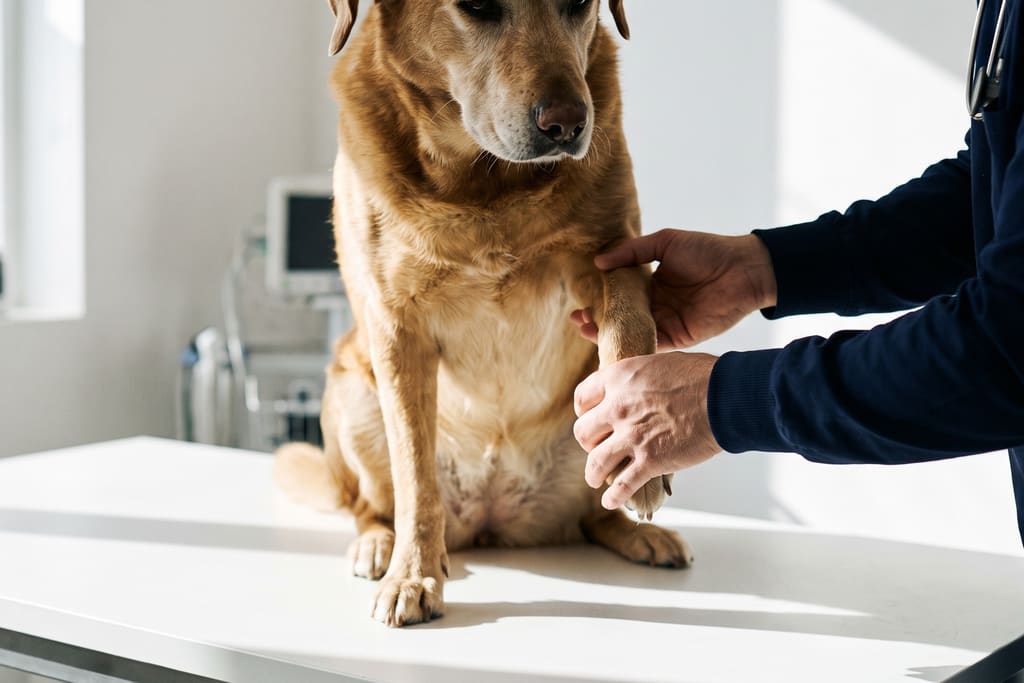
How Do You Talk to Your Vet About Peptides for Your Dog?
Bring the product name, the certificate of analysis for your dog's lot and the studies you read. Then ask these questions, and listen for these answers.
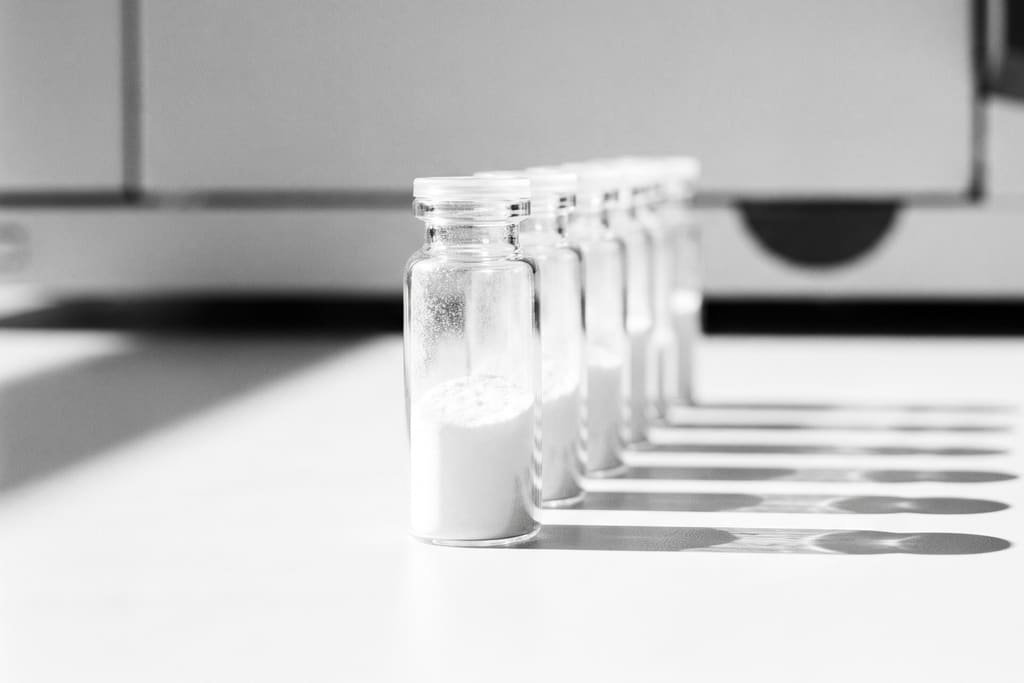
How Can You Tell If a Peptide for Your Dog Is Pure?
A peptide for your dog is pure when an outside lab has tested the exact lot in your vial. Here is how to read the certificate that shows it.
How Do You Choose a Peptide Supplier for Your Dog?
Choose a peptide supplier for your dog with seven checks, from outside lab testing on every batch to a certificate that matches the lot on your vial.


